New · Just released

Manual Muscle Testing & Acupuncture

An Injury-Based Approach

By Matt Callison, L.Ac.

A 62-video treatment library drawing on 33 years of clinical experience — blending traditional Chinese medicine with an injury-based sports medicine approach to assess dysfunction, restore strength, improve movement quality and reduce pain.
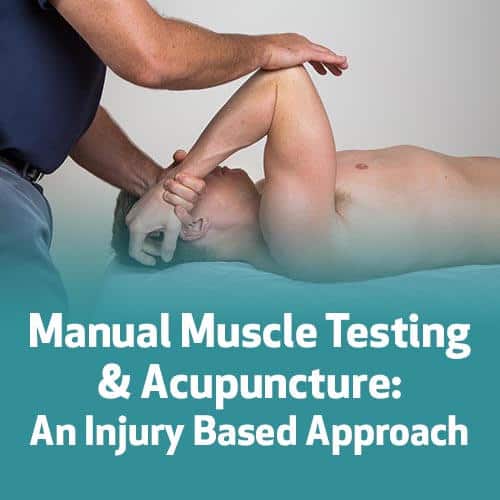
Manual Muscle Testing and Acupuncture: An Injury-Based Approach video library cover

At a glance

62
Treatment videos
3
Courses, by region of the body
33
Years of clinical experience
The library

62 videos from 33 years of clinical practice

3 courses · 7 body-region modules

This video library presents clinical information through the lens of injury-based sports medicine, posture, traditional Chinese medicine channels and effective acupuncture treatment protocols. It is divided into three courses — open any module to see its videos.

Course 1

Introduction to the MMT & Acupuncture Video Library

  • Brief history of manual muscle testing
  • Introduction to Course 2: Neck, Shoulder & Upper Extremity
  • Introduction to Course 3: Low Back, Hip & Lower Extremity
Course 2

Neck, Shoulder & Upper Extremity

39 videos · 4 modules

  1. Bilateral & Unilateral Neck Extensors + Acupuncture
  2. Sternocleidomastoid MMT + Acupuncture
  3. Anterior & Middle Scalene MMT: Acupuncture as an Assessment (LU 7)
  1. Shoulder Internal Rotators Shortness Test
  2. Supraspinatus and Infraspinatus MMTs
  3. Subscapularis MMT
  4. Infraspinatus MMT with Recruitment
  5. Teres Minor MMT with Recruitment
  6. Supraspinatus MMT: Acupuncture as an Assessment (SI 4)
  7. Rotator Cuff Muscles: Detecting Muscle Imbalances
  8. Changing Shoulder Range of Motion with Acupuncture
  9. Deltoid MMTs: Middle, Anterior & Posterior
  10. Bicipital Tenosynovitis – Bicipital Long Head Eccentric Test: Acupuncture as an Assessment (LU 6)
  11. Latissimus Dorsi MMT
  12. Coracobrachialis MMT
  13. Teres Major: Unilateral and Bilateral
  14. Pectoralis Major (Sternal & Clavicular) MMT
  15. Digestive Disturbances: Bilateral Pectoralis Major (Clavicular) MMT with Ren 12 Acupuncture
  1. Serratus Anterior MMTs: Scapular Protraction & Upward Rotation
  2. Levator Scapula MMT
  3. Upper Trapezius MMT
  4. Middle Trapezius MMT
  5. Lower Trapezius MMT
  6. Rhomboid MMTs: Scapular Adduction and Scapular Downward Rotation
  7. Pectoralis Minor Shortness Test: Acupuncture as an Assessment (Flexor Carpi Radialis MEP)
  8. Measuring Scapular Protraction
  1. Biceps Brachii (as a group) MMT
  2. Triceps Brachii MMTs (as a group and individual)
  3. Lateral Epicondylitis & Wrist Tenosynovitis: MMT Assessment of ECRL, ECRB & EDC
  4. Extensor Carpi Ulnaris MMT: Tenosynovitis & TFCC Involvement
  5. FCU MMT, Medial Epicondylitis & Cubital Tunnel Syndrome: Acupuncture as an Assessment
  6. FCR MMT, Medial Epicondylitis & Wrist Tenosynovitis: Acupuncture as an Assessment
  7. Brachioradialis MMT: Muscle Strain near the Elbow
  8. Supinator MMT: Supinator Syndrome
  9. Pronator Quadratus MMT: Carpal Tunnel Syndrome
  10. Pronator Teres MMT and Resistive Testing for Pronator Teres Syndrome
  11. Thenar Eminence Test: Carpal Tunnel Syndrome
  12. Extensor Pollicis Longus MMT: Tenosynovitis and Scaphoid Fracture Differentiation
  13. APL & EPB MMTs, De Quervain’s Tenosynovitis MEPs + Acupuncture
Course 3

Low Back, Hip & Lower Extremity

23 videos · 3 modules

  1. Elevated Ilium: Muscle and Channel Imbalance Sequence
  2. Low Back Pain, Abdominal MMTs & Acupuncture
  3. Psoas MMT: Acupuncture as an Assessment (K 6)
  4. Tensor Fascia Lata MMT: Acupuncture as an Assessment (GB 40)
  5. Pectineus MMT, Injury Identification & Acupuncture
  6. Adductor Brevis MMT & Injury Identification
  7. Adductor Longus MMT & Injury Identification
  8. Anterior Hip Pain MMT Exams, Injury Identification & Acupuncture
  9. Adductor Magnus MMT, Injury Identification & Acupuncture
  10. Quadratus Femoris MMT and Acupuncture
  11. Gluteus Maximus MMT: Acupuncture to Motor Points
  12. Piriformis MMT and Piriformis Syndrome Muscle Resistive Testing
  13. Low Back Pain Exam: Muscle Imbalance between Rectus Abdominis & Psoas
  14. Low Back Pain Exam: Muscle Firing Sequence – Hip Extensors & Trunk Extensors (UB Sinew Channel)
  15. Hip Abduction Exam: Muscle Firing Sequence
  1. Hamstring MMT (as a group)
  2. Hamstring Tenosynovitis (Distal) Resistive Testing + Acupuncture
  3. Hamstring Reactive Test: Sacroiliac Joint & Acupuncture Assessment
  4. Rectus Femoris MMTs: Bent Knee & Straight Leg
  5. Vastus Medialis & Vastus Lateralis Muscle Firing Sequence: Acupuncture Correction
  6. Popliteus MMT: Bilateral Weakness (C4–C6 Fixation)
  7. Sartorius MMT: Pes Anserine Tendinopathy
  1. Chronic Ankle Instability Assessment + Acupuncture

The acupuncture prescriptions in this library can create meaningful changes in strength, movement, proprioception, muscle firing and pain.
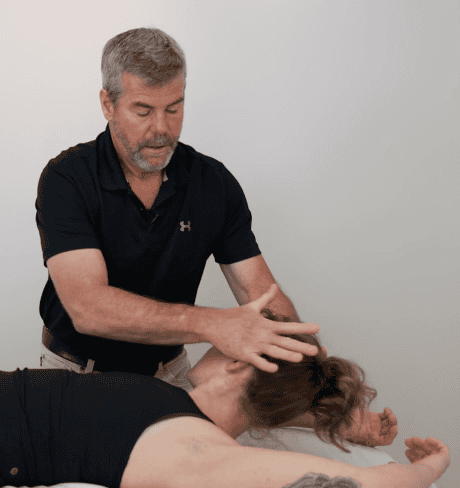
Matt Callison performing a manual muscle test on a patient’s arm

What you’ll learn

An acupuncturist’s approach to muscle testing

This library goes far beyond basic strength testing. You will learn:

  • Manual muscle testing techniques
  • Orthopedic muscle resistive testing
  • Muscle firing sequence assessments
  • Injury-specific differential testing
  • Effective motor point and channel point combinations to change muscle strength and proprioception
  • Clinical applications of traditional Chinese medicine channels

These techniques help you identify the muscles and structures contributing to pain, dysfunction and injury — then evaluate the effects of treatment immediately.

Clinical differentiation

Learn to tell apart conditions such as:

  • Supraspinatus tendinopathy versus bicipital tenosynovitis
  • Muscles involved in De Quervain’s syndrome
  • Muscles involved in medial and lateral elbow pain
  • Low back pain involving specific muscle firing patterns
  • Muscles involved in anterior hip pain
  • Muscles involved in medial knee pain

…and many other common musculoskeletal conditions. Each is explored through clinical assessment, acupuncture treatment and re-assessment, with clinical examples showing how treatment in one area of the body can influence muscles, tissues and symptoms in another.

Motor points

Strategic motor points for systemic relief

In these videos, you will explore how one motor point can change tissue elsewhere in the body:

  • Peroneus longus

    Can reduce sacroiliac joint pain.

  • Piriformis

    Can relax tissue surrounding UB 10, supporting the treatment of cervicogenic headaches.

  • Flexor carpi ulnaris

    Can soften the levator scapulae and decrease pain, especially at the distal levator scapulae attachment.

  • Rectus abdominis

    Can strengthen the sternocleidomastoid muscles.

Matt Callison, L.Ac.
About the creator

Matt Callison, L.Ac.

This course is the culmination of more than 33 years of clinical experience with sports injuries, musculoskeletal dysfunction, posture, manual muscle testing, orthopedic assessment, traditional Chinese medicine channels and acupuncture treatment.

Matt developed and popularized the use of manual muscle testing as an assessment tool in the sports acupuncture field, and established the clinical value of muscle testing and acupuncture together as both diagnostic and treatment tools.

Read Matt Callison’s full bio

Published by

Also available through our publishing partners

Acupuncture World (opens in a new tab)Eastern Currents (opens in a new tab)The CPD Certification Service (opens in a new tab)Lhasa OMS (opens in a new tab)

Order your video library today

All 62 videos are available on demand through Net of Knowledge.

Order on Net of Knowledge (opens in a new tab)