
Dry Needling & Acupuncture: A Few Words
Thousands of Years Before Dry Needling Had a Name
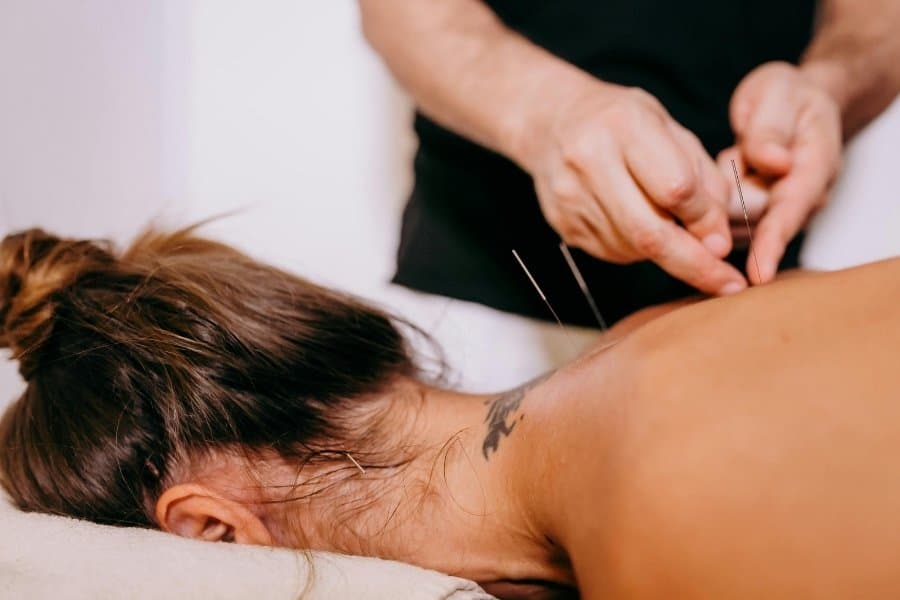
Acupuncturists have been needling knotted myofascial adhesions in order to decrease pain and enhance movement for thousands of years. Dry needling is not a new concept, just a new term.
Janet Travell and David Simmons popularized TrP needling and found how it can decrease pain and myofascial tension. Since then, other practitioners in the Western biomedical community have learned the therapeutic value of acupuncture needling and decided to call it something different (dry needling) with the intention to claim ownership of something that has already existed.
Ashi Points: What TCM Practitioners Have Always Known
Chapter 13 of the Ling Shu (compiled during the 1st and 2nd centuries BCE, Han dynasty) discusses sinew channel needle methods designed for treating ashi points e.g. jing luo ci. Ashi points, for those who do not know, is a traditional term that refers to any tender point in the body assessed by the practitioner, which the patient states like or something similar to “ah, that’s, the point.”
In addition, there are over 68 pages describing needle techniques for various conditions in the Huang Di Nei Jing Ling Shu. Needle technique, to the TCM practitioner is a very important part of acupuncture therapy. I have looked at notes from several dry needling courses and there is very little regard for needle technique. In fact, one course suggested the patient is provided with a mouth guard for them to bite down on due to the pain from dry needling. Many patients cannot handle the barbaric nature of how many western based practitioners apply dry needling. The TCM acupuncturist has the knowledge to provide the correct amount of stimulus to the needle because of the thorough assessment in TCM differential diagnosis.
Like our founding forefathers in TCM, most modern-day TCM practitioners needle tender ashi points daily. This is a fact and is not dry needling, it is acupuncture. Dry needling is a “meatsuit” therapy and has a lack of understanding of associated myofascial system’s (TCM sinew channels) and an ineffectiveness to measure the patient’s ability to handle needle stimulus in regard to the patient’s constitution.
Dry needling is sophomoric and in its infancy stage.
The Anatomy Gap — and Why It’s Closing Fast
That being said, the lack of anatomical curriculum in the TCM based schools is a valid point and was not necessary 20 years ago because TCM is a well-rounded and effective medical system. However, in today’s modern-era acupuncture revolution, mis-informed and opportunistic practitioners are capitalizing on the lack of anatomical knowledge taught in TCM colleges and universities (this model is rapidly changing). Misguided information is taught in dry needling courses such as acupuncturists “do not know how to needle for myofascial pain” and “acupuncture spreads disease.”
I created the Sports Medicine Acupuncture Certification Program 17 years ago along with Stephen Cina L.Ac to empower practitioners in our field with anatomical knowledge, palpation skills along with assessment and treatment of sports and orthopedic injuries. All of which is necessary for our longevity.
Physical therapists and many other biomedical practitioners do not understand the power of treating adjacent and distal acupuncture points to increase proprioception and change myofascial tension. This can be measured with qualitative and quantitative results demonstrable with re-examining palpation, ortho exams and range of motion post-acupuncture treatment. I have been demonstrating this for 30+ years and this concept has been practiced for thousands of years.
Your Roadmap to Dry Needling Mastery — as an Acupuncturist
I highly suggest for acupuncturists to do this:
- Get better at anatomy, functional anatomy, assessment and treatment of sports and orthopedic injuries (SMAC Program & 3-Day Cadaver Dissection for the Acupuncturist).
- Learn how to measure posture and prescribe simple and effective exercises that will help in your treatment results (SMAC Program).
- Learn how to needle ashi points i.e. TrP points, Motor points and soft tissue indurations (SMAC Program and our 2-day Trp needling courses).
- Once the L.Ac feels confident in needling ashi points for pain relief, I suggest the addition of “Dry Needling Expert” on your website, business cards and brochures.
About the author(s):

Matt Callison is the president of the Sports Medicine Acupuncture Certification program. He has been combining sports medicine and traditional Chinese medicine (TCM) for over 26 years. He is the author of the Motor Point and Acupuncture Meridians Chart, the Motor Point Index, The Sports Medicine Acupuncture textbook and many articles on the combination of sports medicine and TCM.
About the author(s):
Matt Callison is the president of the Sports Medicine Acupuncture Certification program. He has been combining sports medicine and traditional Chinese medicine (TCM) for over 26 years. He is the author of the Motor Point and Acupuncture Meridians Chart, the Motor Point Index, The Sports Medicine Acupuncture textbook and many articles on the combination of sports medicine and TCM.